Best No-Code Web App Builders (2026)
Compare the top full-stack no-code web app builders in 2026. Explore features, performance, and architecture guidelines for platforms like Bubble, WeWeb, FlutterFlow, and Toddle.
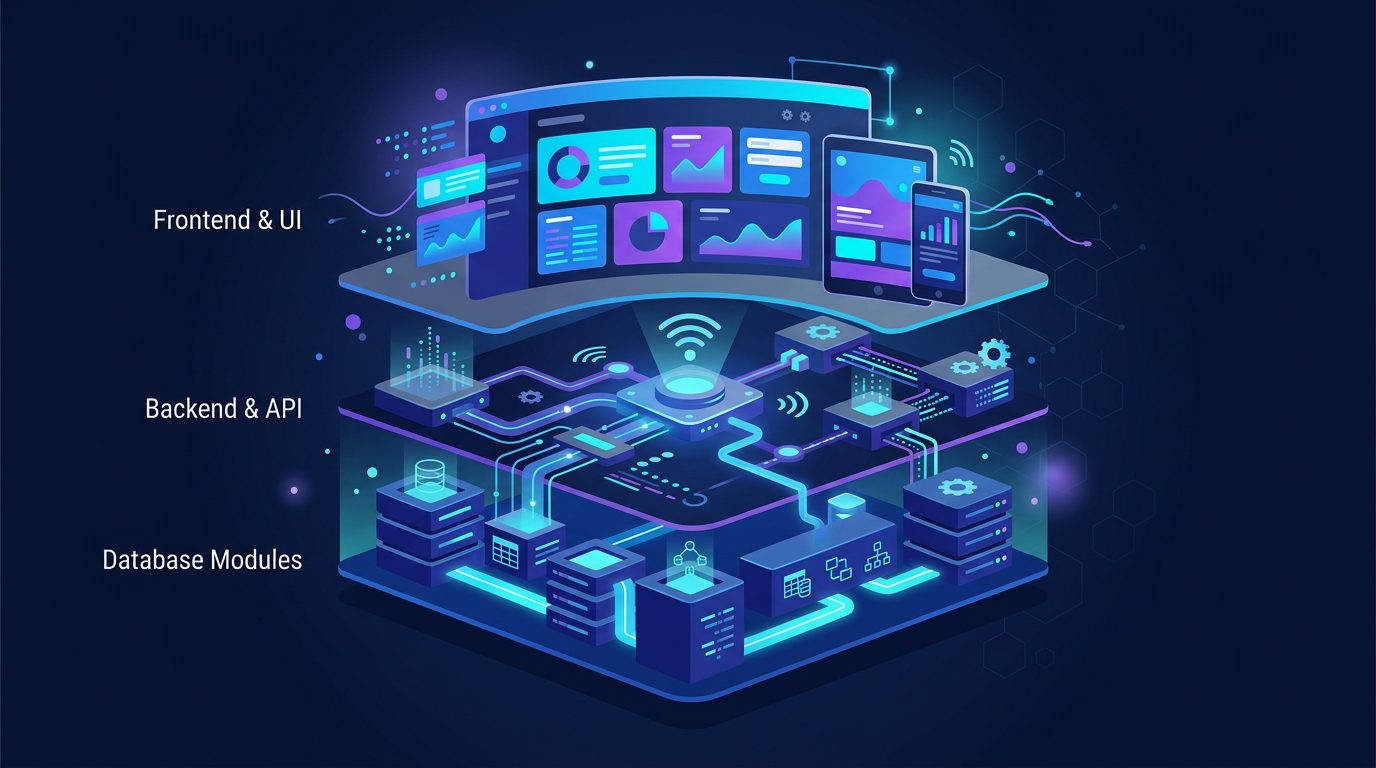
Choosing a web app builder used to mean trading dynamic database performance for ease of use. In 2026, the modern stack allows non-technical operators and lean engineering teams to launch complex, multi-tenant software without writing traditional backend or frontend boilerplates. The standard has shifted from simple drag-and-drop landing pages to full-stack, scalable application development platforms with custom API integrations and complex business logic.
Evaluating Full-Stack No-Code App Builders
Building a serious SaaS product or interactive internal tool requires more than basic layout tools. When evaluating no-code web app engines, your architecture decisions generally hinge on four primary pillars:
- Database Scalability: Can the tool natively query millions of records, or will complex relational schemas cause latency?
- Logic & Workflow Engine: How does the platform handle conditional branching, recursive workflows, and asynchronous background jobs?
- Frontend Flexibility: Does the visual builder output responsive, customizable CSS, or are you locked into rigid component templates?
- Vendor Lock-in & Exportability: Can you export clean Flutter, React, or HTML/CSS code, or is your application permanently tied to the platform's proprietary hosting infrastructure?
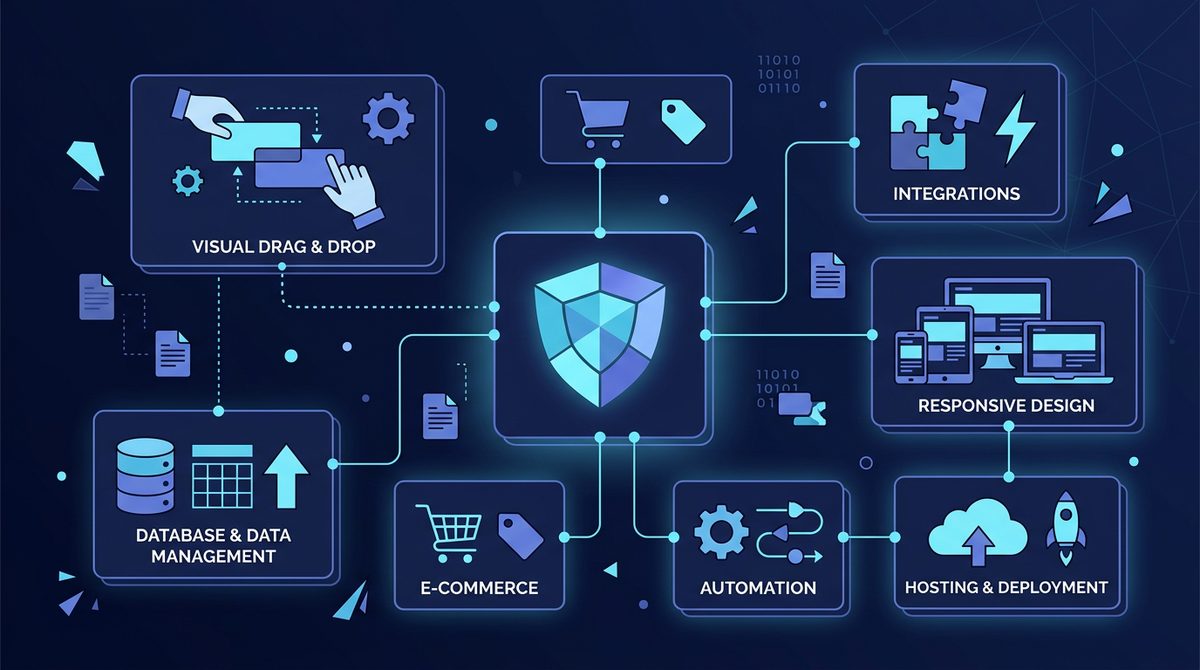
The Top No-Code Web App Builders Compared
The modern no-code ecosystem splits into distinct categories based on frontend control, database depth, and native mobile output. The table below outlines how the leading platforms stack up for full-stack application development.
| Platform | Primary Use Case | Database Architecture | Code Export | Approx. Starting Price |
|---|---|---|---|---|
Note: Pricing, feature tiers, and API rate limits change frequently. Please verify current pricing and infrastructure plans directly on each vendor's official website.
Deep Dive: Top Web App Engines in Detail
1. Bubble: The Established Full-Stack Engine
Bubble remains the market heavy-hitter for founders looking to build custom B2B web applications under a single unified dashboard. Its visual database builder, visual workflow workflow triggers, and deep ecosystem of visual plugins allow users to model complex user permission roles and stripe billing structures natively.
While Bubble historically faced criticism regarding page-speed optimization and dynamic workload unit pricing, recent infrastructure improvements have restored native responsive controls and improved query optimization. However, apps built on Bubble remain hosted exclusively on standard AWS-backed Bubble servers with no raw source code export available.
2. WeWeb: The Modern Frontend Standard for Decoupled Stacks
WeWeb has emerged as the preferred visual builder for operators who want a decoupled architecture. Instead of locking your data into a proprietary database, WeWeb focuses purely on building standard responsive frontends that connect natively to Supabase, Xano, or standard REST/GraphQL APIs.
Because WeWeb renders real Vue.js code under the hood, performance metrics match traditional web frameworks. If your team ever decides to move off the visual canvas, WeWeb allows self-hosting by exporting clean frontend code—eliminating lock-in concerns for venture-backed apps.
3. FlutterFlow: Unified Cross-Platform Web and Mobile
FlutterFlow gives teams the ability to construct native mobile applications (iOS/Android) alongside high-performance web applications using Google's Flutter framework. It provides direct integration with Firebase and Supabase, alongside real-time visual canvas editing, custom Dart code injections, and automated GitHub synchronization.
For SaaS applications where desktop web access and mobile app parity are equally critical, FlutterFlow avoids the need to maintain two separate codebases. Users can export raw Flutter source code at any tier level.
4. Toddle: The Edge-Rendered Tool for Engineering-Minded Creators
Toddle brings software engineering concepts—like component props, strict state management, and edge-rendering—into a visual visual canvas environment. Designed for founders who care deeply about Core Web Vitals, Toddle creates web applications that load quickly and handle high concurrent user counts effortlessly.
Because Toddle adopts visual software patterns similar to React and Web Components, non-developers face a slightly steeper learning curve than with simpler builders. However, the runtime speeds and clean component architecture make it an exceptional tool for dynamic web apps.
Case Study: Building a High-Scale Customer Portal without Code
Consider a mid-market Logistics SaaS company needing a customer portal where clients track shipments, adjust inventory balances, and issue invoices. Using a traditional development cycle, building authentication, role-based database security, and custom data tables would require weeks of backend setup and frontend component styling.
Using a modern decoupled stack—pairing WeWeb for the visual web interface with Xano for backend logic and Supabase for PostgreSQL data storage—the product team built and deployed the full app in ten days:
- Authentication & Security: Handled securely via Supabase Auth with Row-Level Security (RLS) rules restricting tenant data access.
- Custom Frontend Views: Constructed visually in WeWeb using dynamic data grids that bind directly to backend API endpoints.
- Background Job Processing: Webhooks processed shipping updates automatically inside Xano visual workflows, triggering instant updates on the user's dashboard.
The result was an enterprise-grade client portal handling tens of thousands of dynamic records, deployed at a fraction of the budget of a custom-coded React application.
Final Takeaway: Choosing the Right Engine
Selecting the best no-code web app builder comes down to your stack preference and export requirements. If you want a fast, all-in-one visual engine to launch an MVP without managing separate API backends, Bubble is a proven path. If you demand clean architectural separation, zero vendor lock-in, and raw performance, a decoupled frontend engine like WeWeb or Toddle connected to a PostgreSQL database is the standard choice for 2026.
Looking to compare the latest app builders, backends, and operational stacks for your software project? Browse the full SaaSafi directory to explore top-rated visual development software, database infrastructure, and AI workflow tools designed to scale your operations.
- #no-code
- #web app builders
- #saas tools
- #weweb
- #bubble
Frequently asked questions
What is the difference between an all-in-one builder and a decoupled stack?
Decoupled stacks separate the frontend visual builder (e.g., WeWeb, Toddle) from the backend database (e.g., Supabase, Xano). All-in-one platforms (e.g., Bubble) host both your user interface and database inside the same platform ecosystem. Decoupled architectures generally offer higher performance, better security boundaries, and lower vendor lock-in.
Can I export code from these platforms if I want to self-host?
Yes, platforms like WeWeb, Toddle, and FlutterFlow allow users to export standard Vue.js, Web Components, or Flutter source code. You can host these files on your own cloud infrastructure, effectively eliminating total platform lock-in.
How do no-code web applications handle scaling and high traffic?
Modern web app builders handle millions of database queries when paired with dynamic backend tools like Supabase (PostgreSQL) or Xano. For all-in-one engines, performance depends heavily on database optimization, clean indexing, and efficient workload unit management.
SaaSafi Team
Editorial
Written by the SaaSafi Team — we test and track SaaS tools for founders and operators.
Get the weekly issue
One email a week: new articles, tool teardowns and pricing finds. No spam, unsubscribe anytime.


Comments
No comments yet — start the conversation.